You have no items in your shopping cart.


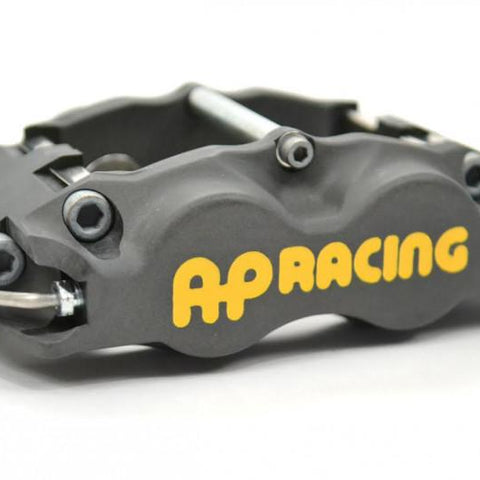
Brake pad choice can become nearly as controversial as politics or religion. After more than a decade of trying compounds from all over the market, G-LOC has become our go-to pad for both factory Corvette calipers and our AP Racing-equipped track cars.
Not because they win one individual category. They work because the complete package of bite, modulation, pad life, rotor life, and cost lands right in the Goldilocks Zone.
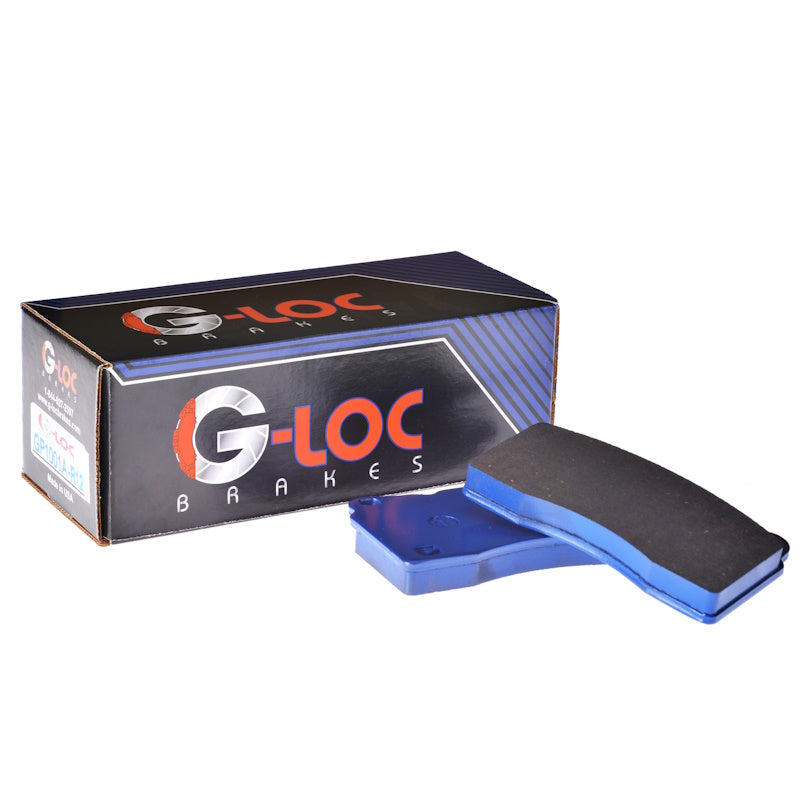
These pads are supplied in the correct factory shape and thickness for C6 Corvette Base, Z51, Grand Sport, and Z06 brake calipers. Select the appropriate vehicle position and compound from the options above.
Grand Sport and Z06 calipers use a single-piece G-LOC pad in place of the factory six separate padlets per caliper. That gives you substantially more usable pad area and makes pad changes considerably less annoying.
Unsure which compound belongs on your car? Call us. We will happily talk your face off about tires, brakes, track use, driving style, and whatever else is necessary to get you into the right pad.
You can buy pads with more initial bite. You can buy cheaper pads. You can buy pads that last forever while slowly machining your rotors into scrap.
What we care about is the complete operating cost and driving experience. G-LOC gives us strong, predictable torque, excellent pedal modulation, respectable pad life, unusually good rotor life, and reasonable replacement cost.
That combination matters a lot more to us than having the most aggressive number on a friction chart.
Maximum friction is only one piece of the equation. A track pad has to work with the driver, the tire, the rotor, and your wallet.
Enough friction to generate serious deceleration without requiring excessive pedal effort.
Progressive response so you can precisely control brake pressure rather than working with an on/off switch.
Strong wear life relative to the price of the pad and the amount of heat it is asked to survive.
A pad that saves itself by eating an expensive rotor isn't actually saving you much money.
Pads plus rotors plus replacement frequency. That's the number that actually comes out of your track budget.
Any properly functioning modern performance brake system can create enough torque to overwhelm the tire. What most drivers describe as "stopping power" is largely the pad's coefficient of friction—or Mu—and how much pedal force is required to produce a given amount of brake torque.
Huge initial bite isn't automatically better. A very aggressive pad can feel like an on/off switch, which makes fine pressure control more difficult during trail braking. We like G-LOC because the torque is strong but remains progressive and easy to meter.
G-LOC compounds generally give us very respectable wear life for their price. There are more expensive pads and cheaper pads, but the combination of durability and cost is difficult to beat.
Rotors—especially high-end AP Racing discs—are expensive. We would happily sacrifice some brake-pad life to preserve rotor life, and G-LOC compounds have consistently been among the more rotor-friendly race pads we've used.
The higher the number, generally the more heat capability and brake torque you're moving toward. That does not mean the highest-numbered compound is automatically the best pad for your car.
| Compound | Best Use | Operating Range | Bite / Torque | Street Use |
|---|---|---|---|---|
| GS-1 | Street | Ambient – 800°F | Street Performance | Yes |
| R6 | Autocross | 0 – 1000°F+ | High Cold Torque | Yes, but getting noisy/dusty |
| R8 | Track Days | 74 – 1250°F+ | Moderate Race Torque | Drive-to-track capable |
| R10 | Track / Road Course | 118 – 1475°F+ | Strong | Maybe |
| R12 | Serious Track Use | 173 – 1860°F | Very Strong | If you want |
| R16 | High-Heat Racing | 255 – 2000°F | Extremely Strong | Ehhhhhh... |
| R18 | Maximum Race Application | 610 – 2100°F+ | Maximum | Listen: I do but YOU probably won't love it |
Want the actual differences rather than "street / track / race"? Here's the useful version.
GS-1 is the street compound. It offers strong cold response with very low noise and dust, excellent longevity, and exceptional rotor friendliness.
Use it for a street-driven C6 where quiet operation and clean wheels matter more than surviving repeated high-temperature track sessions.
NOT recommended for track use.R6 is designed around extremely strong cold torque, making it particularly well suited for autocross where the brakes need to work immediately without a warm-up lap.
It retains progressive modulation and release but will generally make considerably more dust and noise than GS-1.
NOT generally recommended for road-course racing.R8 provides good initial bite, excellent modulation and release, substantial fade resistance, and very good rotor friendliness.
It is an excellent entry point for track-day use and remains usable enough at lower temperatures to drive the car to and from the track.
Not recommended as a daily street compound due to noise and dust.R10 steps up considerably from R8 in initial bite and overall coefficient of friction while retaining the smooth modulation and release characteristics G-LOC is known for.
It also remains exceptionally rotor friendly for a compound with this level of performance.
Not recommended for daily street use.R12 adds another level of initial bite, sustained torque, and fade resistance over R10 while maintaining predictable modulation and release.
It is somewhat more aggressive on rotors than R10, but remains relatively rotor friendly compared with many competing compounds at this performance level.
Track compound. Not recommended for daily street use.R16 delivers extremely aggressive initial bite, a linear torque curve, and very high fade resistance for cars operating at serious brake temperatures.
It still retains the modulation and clean release characteristics found throughout the G-LOC R-Series.
Requires heat to operate properly. Not a street pad.R18 is G-LOC's highest-level R-Series compound, with maximum initial bite, overall brake torque, thermal capability, and an extremely linear torque curve.
This is a dedicated race compound for applications generating substantial brake temperature. More is not automatically better: if your braking system never reaches the required operating temperature, R18 is the wrong choice.
Dedicated race use only.Tire choice, car weight, aero, driver experience, track layout, caliper, rotor size, and driving style all affect which compound makes sense.
Tell us what you're driving, what tire you're on, and what you're doing with the car. We'll help you choose the compound rather than simply selling you the most aggressive pad in the dropdown.
We've spent years trying different combinations on street cars, track cars, factory calipers, and AP Racing systems. When the entire equation is considered—not just maximum bite—G-LOC remains our favorite all-around brake pad line.