You have no items in your shopping cart.


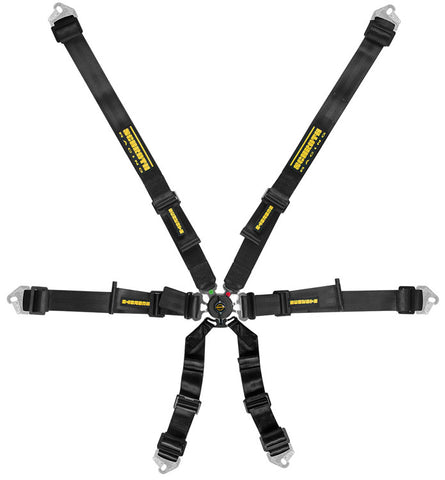
Schroth's Flexi 2x2 is a full 2-inch, FIA-homologated 6-point racing harness built around excellent FHR compatibility, supple webbing, and one particularly useful trick: reversible lap belts.
Instead of buying a harness and then discovering that the adjustment direction is miserable in your seat and cockpit, the Flexi lap belts can be configured to pull up or pull down. That's a simple idea that makes this one of our favorite harnesses for tightly packaged track cars like Corvettes.
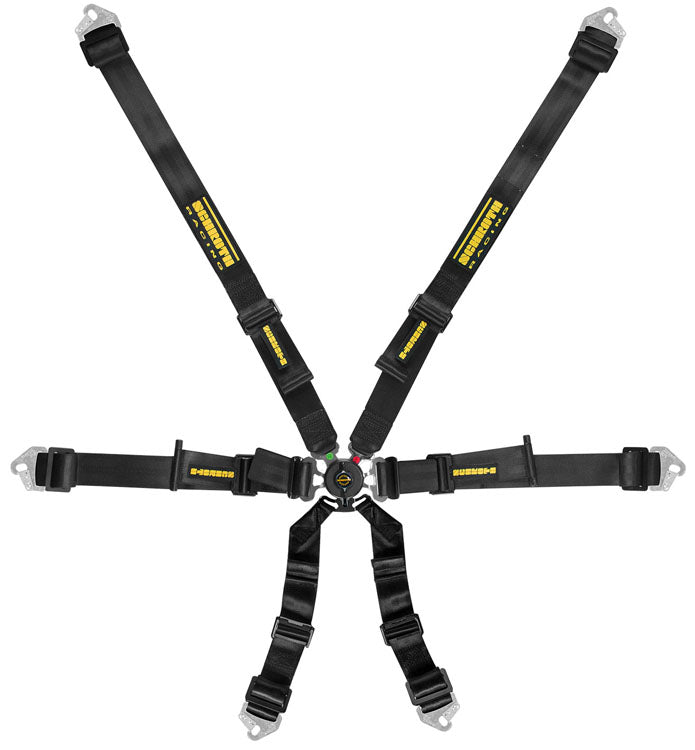
The Flexi 2x2 uses 2-inch webbing for the shoulder, lap, and sub-belt system, with shoulder belts specifically designed around use with a Frontal Head Restraint.
The narrower shoulder webbing sits properly on the restraint rather than hanging over its edges, while the 2-inch lap belts fit naturally across the pelvis.
An adjustable T-bar sub-belt system and rotary cam-lock buckle complete a straightforward, professional 6-point package.
Harnesses aren't particularly complicated. The difference between an average one and a really good one is usually found in fit, adjustment, hardware, and how much fighting is required once you're already sitting in the car.
Full 2-inch shoulder webbing is designed to sit properly on a head-and-neck restraint and distribute load across the device.
Compact lap belts fit the pelvis comfortably and use Schroth's reversible Flexi hardware arrangement.
Adjustable 2-inch anti-submarine belts allow the lower portion of the harness to be properly fitted to the driver.
A central rotary buckle brings the complete 6-point system together in a compact, familiar racing-harness layout.
This is the feature that separates the Flexi from a lot of conventional racing harnesses. The lap-belt hardware is wrapped rather than permanently sewn into one adjustment configuration.
In cockpits where you have good access near the center of the seat, the lap belts can be configured so the driver pulls inward and upward to tighten them.
For some Corvette seat installations, this is by far the easiest arrangement to use while already strapped into the car.
Rewrap the same lap-belt hardware and the adjustment direction can be reversed so the driver pulls outward and downward to tighten.
Seat width, mounting-point location, center-console clearance, and the driver's reach determine which setup works best. The Flexi lets you figure that out after the harness is in the car.
Corvettes aren't enormous inside once you add a fixed-back race seat, harness bar or cage, center console, and everything else required for a serious track car.
Harness adjustment can become surprisingly annoying when the adjuster happens to pull directly into the side of the seat or into an area you can't reach while strapped in.
Being able to change the lap belts between pull-up and pull-down configurations makes the Flexi considerably easier to adapt to different seats, drivers, and mounting arrangements. That's the feature that earns this harness a spot on our shelf.
One thing that doesn't show up particularly well in a specification chart is how a harness actually feels in your hands and against your body.
Schroth's nylon webbing is notably supple compared with some stiffer racing belts. It conforms comfortably around the pelvis and shoulders instead of feeling like you're wrapping yourself in a set of tie-down straps.
That's not the glamorous part of a safety harness, but you'll notice it every single time you get strapped into the car.
The Flexi's hardware is wrapped into the webbing rather than permanently trapped, allowing mounting hardware and lap-belt configuration to be changed when necessary.
Snap-in attachments provide a convenient mounting arrangement at the lap and anti-submarine attachment points.
The 2-inch shoulder belts are intended specifically for proper use with modern frontal-head-restraint systems.
This isn't about matching the roll cage, the seat, or the rest of the interior.
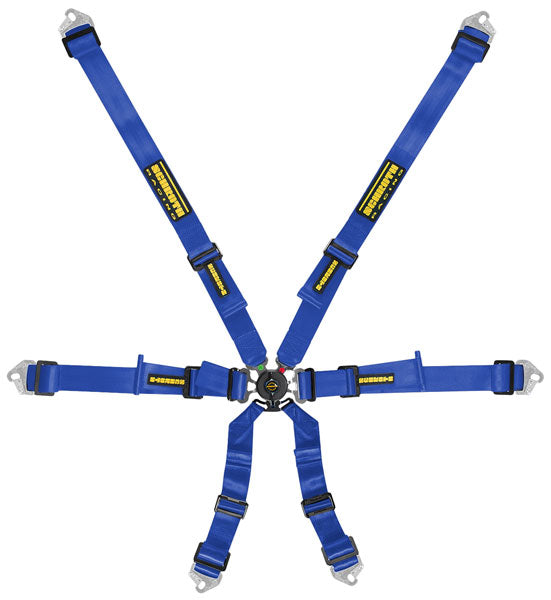
In an emergency, safety crews may need to identify and release your harness very quickly. Making the belts visually distinct from the driver's suit can make that job easier.
Black suit? Consider red, blue, or yellow belts. Red suit? Black or blue. It's a tiny decision when ordering the harness that may matter a lot more than how coordinated the car looks.
Pick the color you like—or better yet, pick one that gives good contrast against your driving suit.
A multi-point racing harness is one component of a complete driver-restraint system—not a standalone safety modification.
Your seat, harness mounting points, belt angles, helmet, and head-and-neck restraint all need to work together and comply with the rules of the events and sanctioning organizations you're running with.
Harness performance depends on correct mounting geometry, seat compatibility, belt routing, anchorage, and adjustment. Follow Schroth's installation requirements, the labeling supplied with the harness, and the rules of your sanctioning organization or track event.