You have no items in your shopping cart.


Completely unnecessary. Thoroughly unreasonable. Approximately thirty minutes of CNC machine time. Ridiculous amounts of material removal. Intricate 5-axis machining. Anodized aluminum.
All to replace an oil cap that was already perfectly capable of being an oil cap.
There is absolutely no rational reason for this product to exist.
We made it anyway.
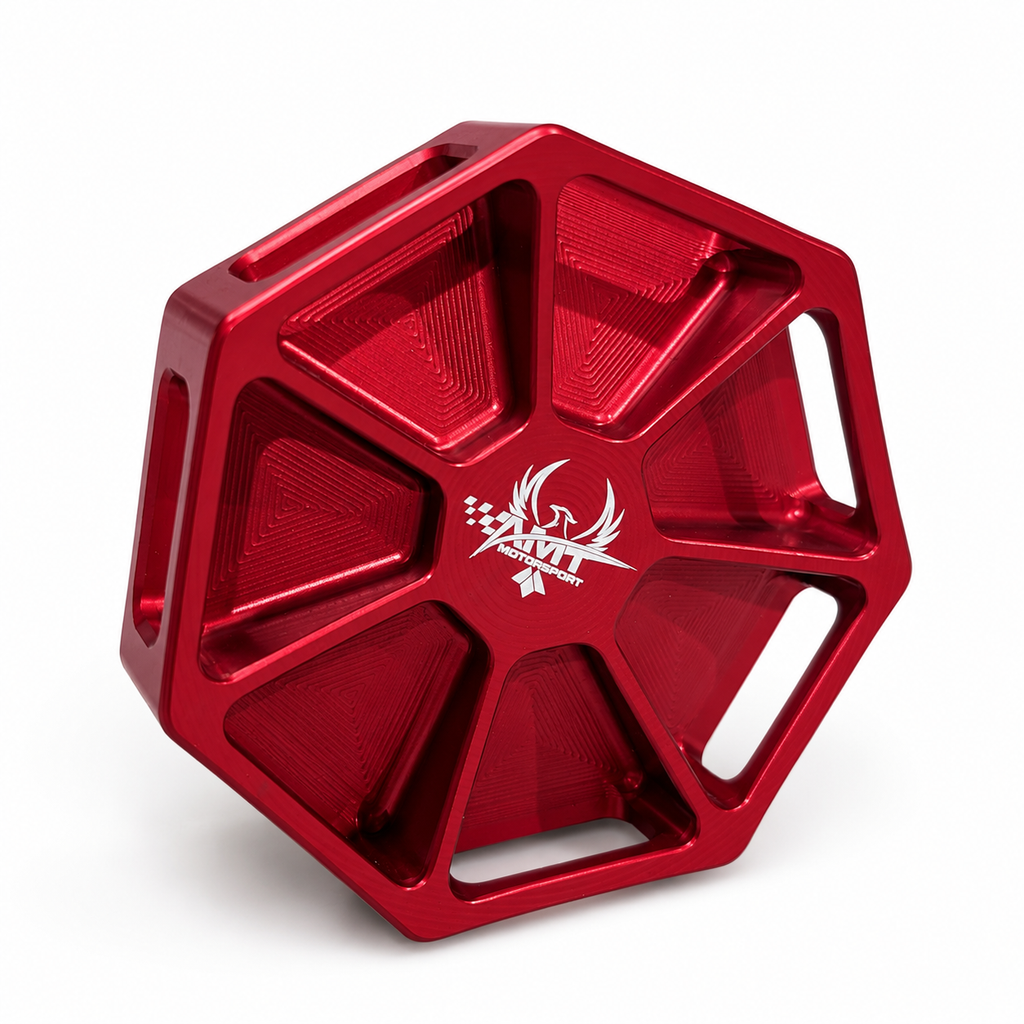
An oil cap has two jobs: keep the oil inside the engine and come off when you need to add more.
GM solved this problem a very long time ago with an inexpensive molded plastic cap. It works beautifully.
Obviously, this was unacceptable.So instead of making something sensible, we started with a chunk of 6061-T6 aluminum, attacked it from nearly every conceivable direction on a 5-axis machining center, removed most of the material we paid for, and anodized what survived.
Then we laser engraved our logo in the center, because subtlety had clearly left the building several operations ago.
There are plenty of products on the market advertised as billet oil caps that are really billet covers designed to slide over the factory plastic piece.
Frankly, that would have been much easier.
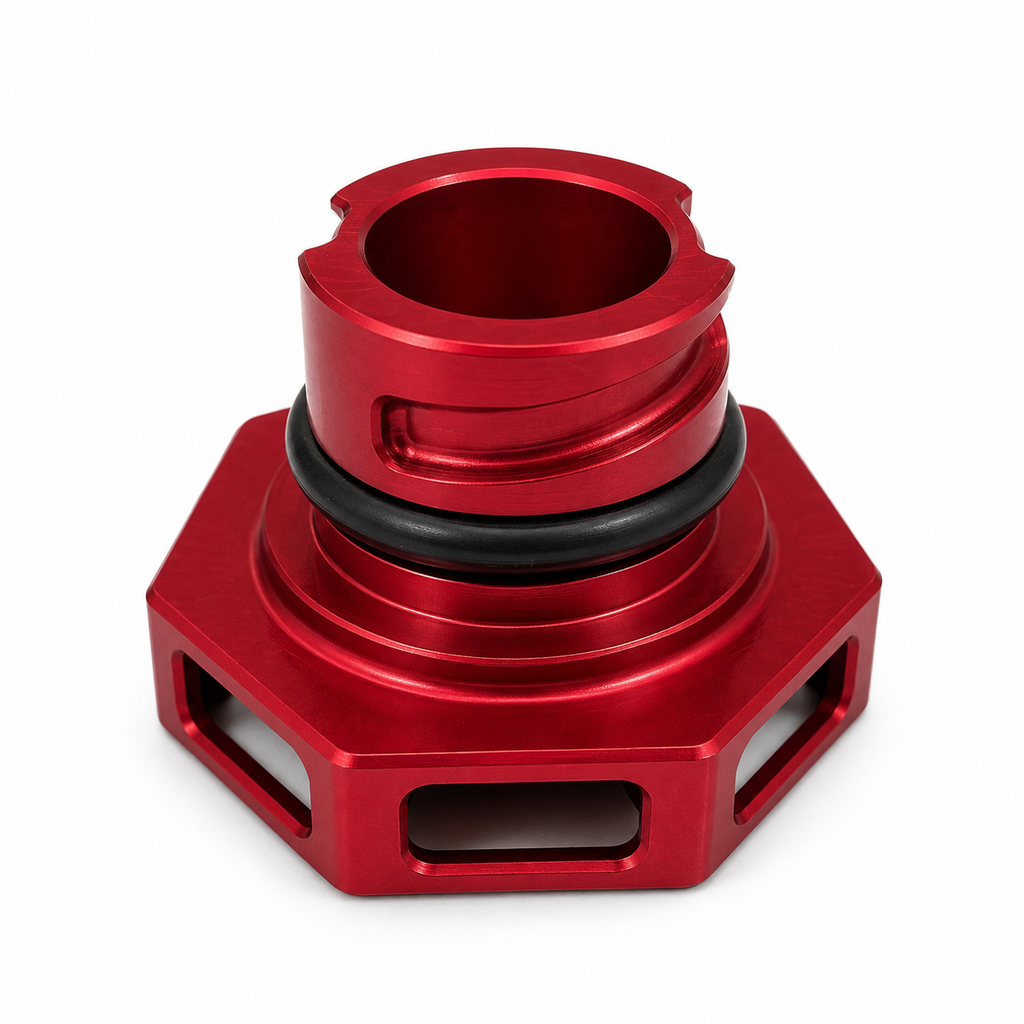
Overkill completely replaces the factory cap. The sealing surfaces, O-ring interface, and locking geometry are all machined directly into the aluminum component.
Because if we're going to spend an unreasonable amount of time making an oil cap, we're at least going to make the entire damn oil cap.
The C8 oil-fill neck uses a double-helix locking geometry that pulls the cap into position as it rotates.
A reasonable company would have looked at that feature, realized nobody was ever going to see it, and immediately gone back to designing an oil cap cover.
Instead, we reverse engineered it, modeled it, developed the tooling and tool paths necessary to machine it, and obsessed over the fit until the cap rotated into place exactly the way we wanted.
Which means that once or twice a year, when you actually remove this thing to add oil to your 700-mile-per-year garage queen, you can twist it back into place and quietly say: "Ohhhhh baby..."
Seven sides actually feel remarkably natural in your hand when you're twisting the cap.
Unfortunately, choosing an odd number of sides also made nearly every stage of manufacturing more annoying.
Material handling, machining, secondary operations, robot tending, inspection, and packaging all required custom workholding or some other unnecessary accommodation because we apparently enjoy creating our own problems.
Would six sides have been easier? Absolutely.
But then it wouldn't be Overkill.
This is what happens when engineers and machinists are allowed to design accessories without adult supervision.
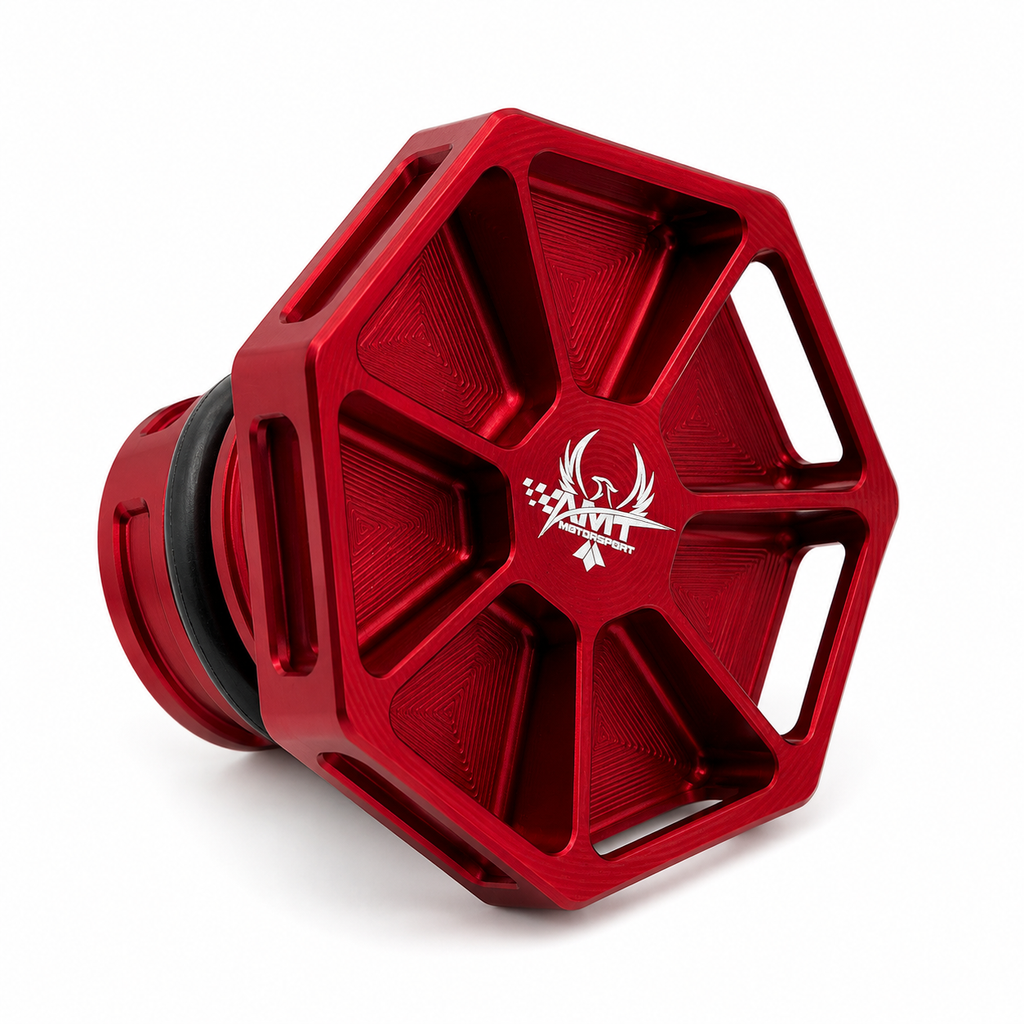
No cast blank. No stamped shell. No billet cover glued onto a factory part. We start with aluminum and remove everything that doesn't look like an unnecessarily complicated oil cap.
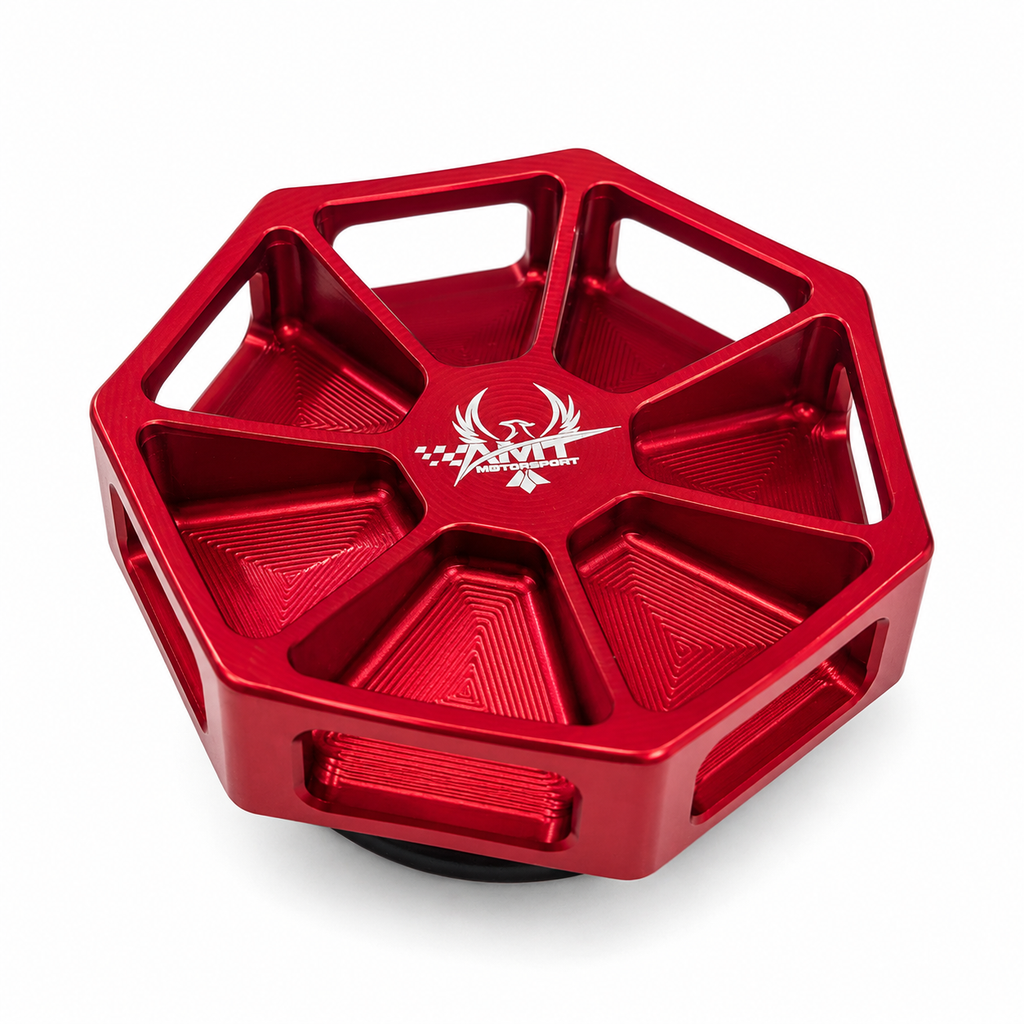
Deep pockets, side windows, sculpted ribs, underside features, and the locking interface require access from directions that a $105 oil cap has absolutely no business requiring.
We deliberately left the machining character visible in the deep pockets. This is a machined component, and we're not particularly interested in disguising the evidence.
The underside isn't hiding a stock cap. The locking geometry and sealing interface are part of the machined component itself. Entirely unnecessary. Much more satisfying.
Maybe you've spent thousands of dollars making the C8 engine bay look exactly the way you want it and the stock plastic cap suddenly looks like it came off a rental car.
Maybe you like beautifully machined parts simply because beautifully machined parts are cool.
Maybe your Corvette spends most of its life at car shows and you need one more item for the little plaque in the frunk:
OIL CAP — FULL 5-AXIS CNC MACHINED FROM 6061-T6 ALUMINUM.
Or maybe you just appreciate the idea of someone putting this much engineering, machining time, and general foolishness into a part whose entire job is keeping oil from coming out of a hole.
We understand.
Sitting by itself, it's an absurdly complicated oil cap. Installed in a properly detailed C8 engine bay, the whole exercise becomes at least slightly easier to defend.
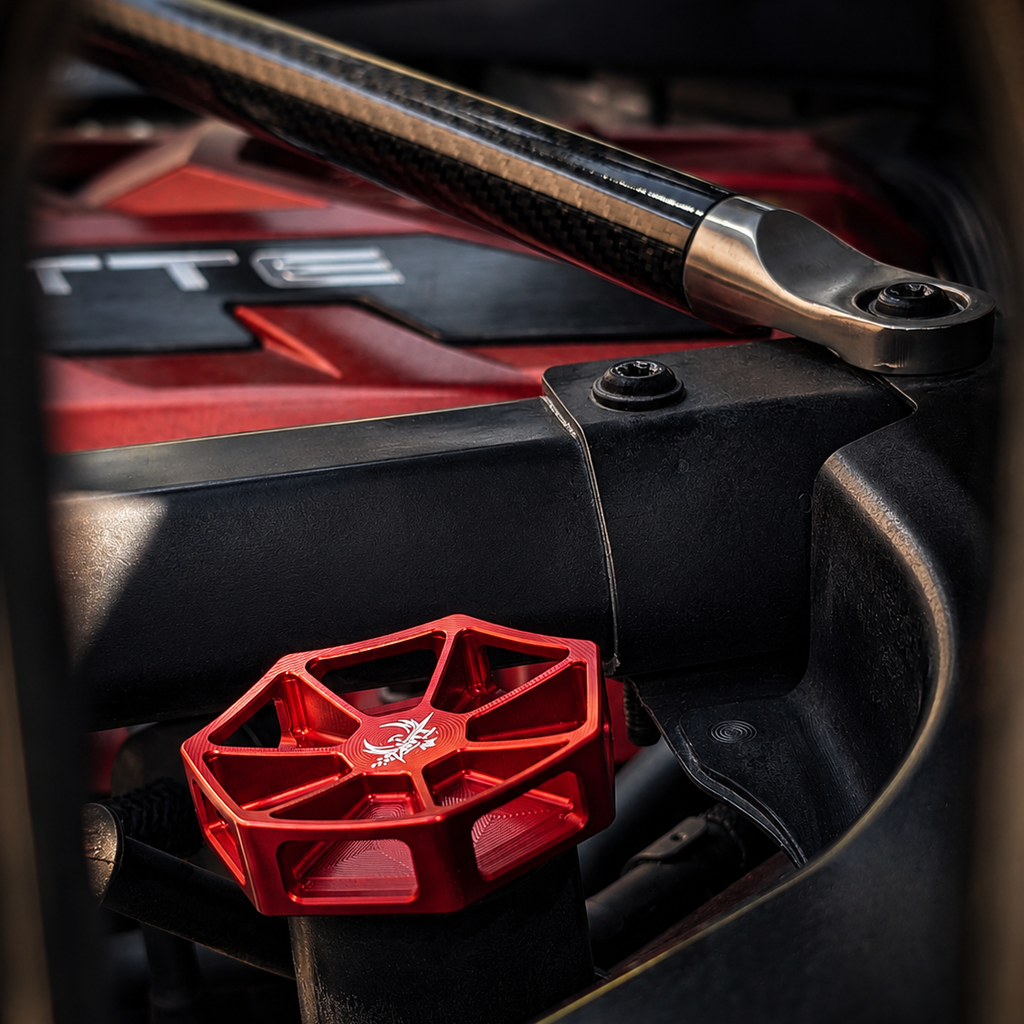
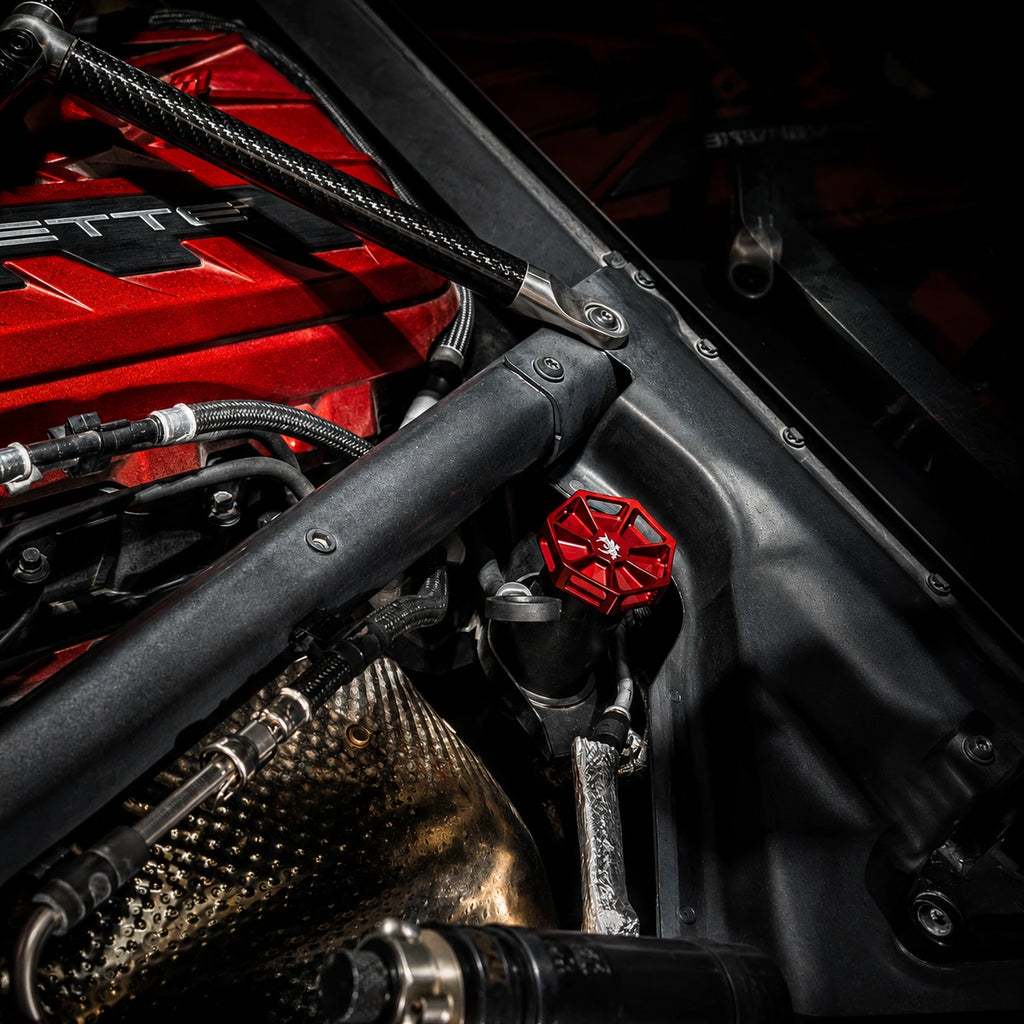
All anodized. All laser engraved. All equally unnecessary.
Overkill is machined from 6061-T6 aluminum at AMT Motorsport, then anodized and laser engraved before being inspected, packaged, and sent off to replace one of the cheapest functioning components on your Corvette.
We make serious suspension, brake, aero, and safety components.
Sometimes it's fun to spend the same amount of manufacturing effort on something completely stupid.
Some things exist because they're faster. Some exist because they're lighter. Some solve an actual problem. And some exist because making a hilariously over-engineered version of an ordinary object is simply awesome. May we humbly present: Overkill.